
Tuesday, October 11, 2016

Monday, August 1, 2016
What's in your hunting pack?


The Boy Scout in me causes me to want to be prepared for just about anything when I'm in the wilderness hunting, working, or just for fun. To accomplish this I've put together a back pack that I call my emergency/hunting pack. I primarily use it when I go hunting, but I take this pack with me anytime I venture into the wilderness for any reason. It's impossible to be prepared for every possible scenario, but it is possible to prepare for scenarios that are probable. If you spend enough time in Gods wonderful creation, it's not a matter of if something will happen, it's a matter of when. It doesn't have to be a tragic event, but in the woods a minor event can turn into a major event quickly without some preparedness. Little things like having so much fun that the time got away from you and it's now dark, or get lost, or get stranded, or a pop up thunder storm happens, or you or someone in your party has a minor medical event (headache, fall injury), or all of the above. This post is not a how to for survival, it is just a what do I need. We will save the how to for another day. I'm going to show you the basics I start with for deer hunting. My pack is fairly loaded including some tools of trade because my pack is more than just an emergency pack. For each trip I will add or remove things as the conditions or activities require. I will always have some water and some snacks in the pack. If I know It's likely going to rain I will pack actual rain gear. If it's winter time I will have cold weather hats, gloves, and extra socks. If it's "bug" season I will throw in some bug repellent. If I'm elk hunting or going further than normal, sometimes I will throw in a small tarp. I think you get the point. The key is to pack as much as you comfortably can without packing things that you will never need. This is not intended for backpacking, just to get you by when needed and have the need tools take care of your game in the field. My pack could be a little lighter, but I've built in some redundancy and back up for some of the more important items. Everything in my pack is something that I wish I had with me at sometime and didn't or makes my life easier in the field.
Here is my starter list:
1. A comfortable multiple pocket pack. Mine just happens to be camouflage since I primarily use it when I'm hunting. I have a screw in hanger similar to a screw in tree step. This way I can hang the bag on a tree off the ground. I also keep a carabiner clip and a piece of para cord attached to it. These make it easy to attach to tree stand pull up ropes.
2. Poncho, candles, and water proof matches. Believe it or not these could be the most important items in the bag. Obviously the poncho can keep you dry, but in cold weather with the poncho on you can squat down and lite a candle with the water proof matches all under the poncho. It catches the heat and if needed you can build a bigger fire using the candle.
3. Compass. No matter how good you think you are you can still get turned around.
4. Toilet paper. Enough said.
5. First aid kit with a sewing kit, hand warmers, tylenol, and a lighter in addition to the the first aid items the kit came with. Hand warmers are just to get some easy warmth. Tylenol is safe to give to just about anyone. You maybe wandering why a lighter if I already have water proof matches? Fire/heat is so important that you need to have two reliable sources so you will have a backup.
6. Wet ones cleaning clothes and hand sanitizer. I use it after field dressing and can be used to help clean around a wound, or just to clean your hands before you eat.
7. Two flash lights, one hand held and one head lamp. They both require the same type of batteries so I only have to carry one type of extra batteries. You always need to have spare batteries.
8. Ropes. I carry two ropes that are about 10' to 15' long and some para cord. These are your building tools for shelter if needed, field dressing equipment, tie downs, and what ever else you think up.
9. Electrial tape and orange flagging ribbon. There is nothing handier than Electrial tape except for duct tape, but duct tape is to bulky. Flagging ribbon so you can mark trails, where you've been, or game sign.
10. Extra carabiner clip. Sometimes it's easier to clip to something than tie to.
11. Rubber gloves and zip lock bags. The gloves are used when field dressing and can be used if you need to administer first aid. Sometimes I will keep the heart of a deer so that is where the bag comes in.
12. Things that cut. A knife, bone saw, folding wood saw, multi tool, and a sharping stone. Knife and bone saw are for field dressing deer. The folding wood saw can be used to clear shooting lanes, build shelter, or cut walking sticks. The multi tool is a backup knife along with a hand full of useful tools. A dull knife is not much good so you need to be able to keep it sharp with the sharpening stone.
13. Pens to fill out tags with. In Arkansas it's actually illegal to not have a pen with you when hunting game that requires you to fill out a tag.
14. Small red strobe light. These are made for runners, but can be useful to mark a spot in the dark when tracking a wounded animal or to use if you are lost.
15. A dragging harness. These are handy because you can drag a deer hands free and still carry your weapon and use your hands for navigation.
Friday, July 15, 2016
Trying Reloading the Economical Way
If you have ever wanted to try reloading your own ammo, but
was turned off by the cost of the traditional reloading equipment required there
is another option. LEE Precision, Inc.
makes LEE LOADER kits for some of the more common calibers. No press, scale, or any special equipment is
required. Everything you need comes in a
small kit for about $40 per caliber. The
only thing additional required is a rubber mallet and the materials for the
ammo (brass, primers, gun powder, and the projectile). I have two of these so far, the .44 mag. and
the .270 win. They both are producing
more accurate ammo than factory and are fun and easy to use. The kit comes complete with instructions and
a chart with tested combinations. You
just select the combination of powder and projectile from the chart and it will
work. Since you are reloading your own,
you can test different combinations to see which one(s) work better for you and
your gun. The kits are somewhat limited
in that they neck size only so they are not recommended for semi, pump, and
lever action guns. With that being said,
I’m not having any issues running reloads through my .44 may semi automatic
rifle. Be sure to follow the
manufacturer’s recommendations and instructions.
At the end of the day, these kits are great to try out
reloading without breaking the bank. If
your are just doing a few now and then it may be all you will ever need for
reloading. Or, it might have confirmed
your desire to get started with a full-blown set up. Either way, for the money if you are half way
interested in trying reloading this is defiantly a good way to get started.
View the video I made for reloading a .44 mag. to see how
they work.
Save The Acorns,
Brent Watkins
Tuesday, June 21, 2016

Friday, May 27, 2016
Chronic Wasting Disease


I attended a meeting this week put on by the Arkansas Game
and Fish Commission (AGFC) in regards to the recent discovery of CWD (Chronic
Wasting Disease) in Arkansas. The
purpose of the meeting was to inform the public of what they know, what they
have found, and what they plan on doing about it. This is a new problem to Arkansas, but is not
a new problem in the nation. Even though
it is a new problem for Arkansas, the AGFC has had a CWD response plan in place
since 2006. So they have been watching
for this and are ready for this unfortunate event. They have done their research, consulted with
experts that have dealt with this, and have come up some proposed
regulations. You can visit agfc.com and
review the prosed changes and voice your opinion. I highly recommend you visit site anyway
because they have additional information on the subject. They know that it is not probable to
completely eliminate the disease, so they are trying to contain it, limit its
spread, and weed it out. They can’t do
it on their own, it will be up to the hunters to “manage” the states herd per
the states regulations. What I mean is
we will need to follow the practices and regulations set forth by AGFC in order
to accomplish the goal. From what I
gathered from the meeting, the overall strategy is to initially manage for a
younger deer herd because of how the disease spreads. I know that won’t set well with a lot people
and trophy hunters, but we need to look at the bigger picture for the future
health of the herd for generations to come.
It appears the regulations will allow for a more liberal bag limit and
more opportunities to harvest deer and elk.
From a hunting and meat point, I think this is a good thing. Who doesn’t want to hunt more and harvest
more deer? AGFC can’t make you pull the
trigger on smaller deer, but it might be worth it if it helps the overall
goal. This is likely to only affect the
areas of the state where the disease is an issue. Right now that is the Buffalo Valley area. So parts of the state may see very little
changes. In the future once the herd and
CWD is in check, I’m sure the regulations will adjust accordingly. Go to the web site, do your research, and be
ready for changes in the hunting regulations this upcoming season.

Monday, May 23, 2016
Bear Visitor
We had a visitor checking out the tractor. It must not have been just right, because the bear left it alone. Thankfully!


Monday, May 9, 2016
Family Fun Camping Weekend


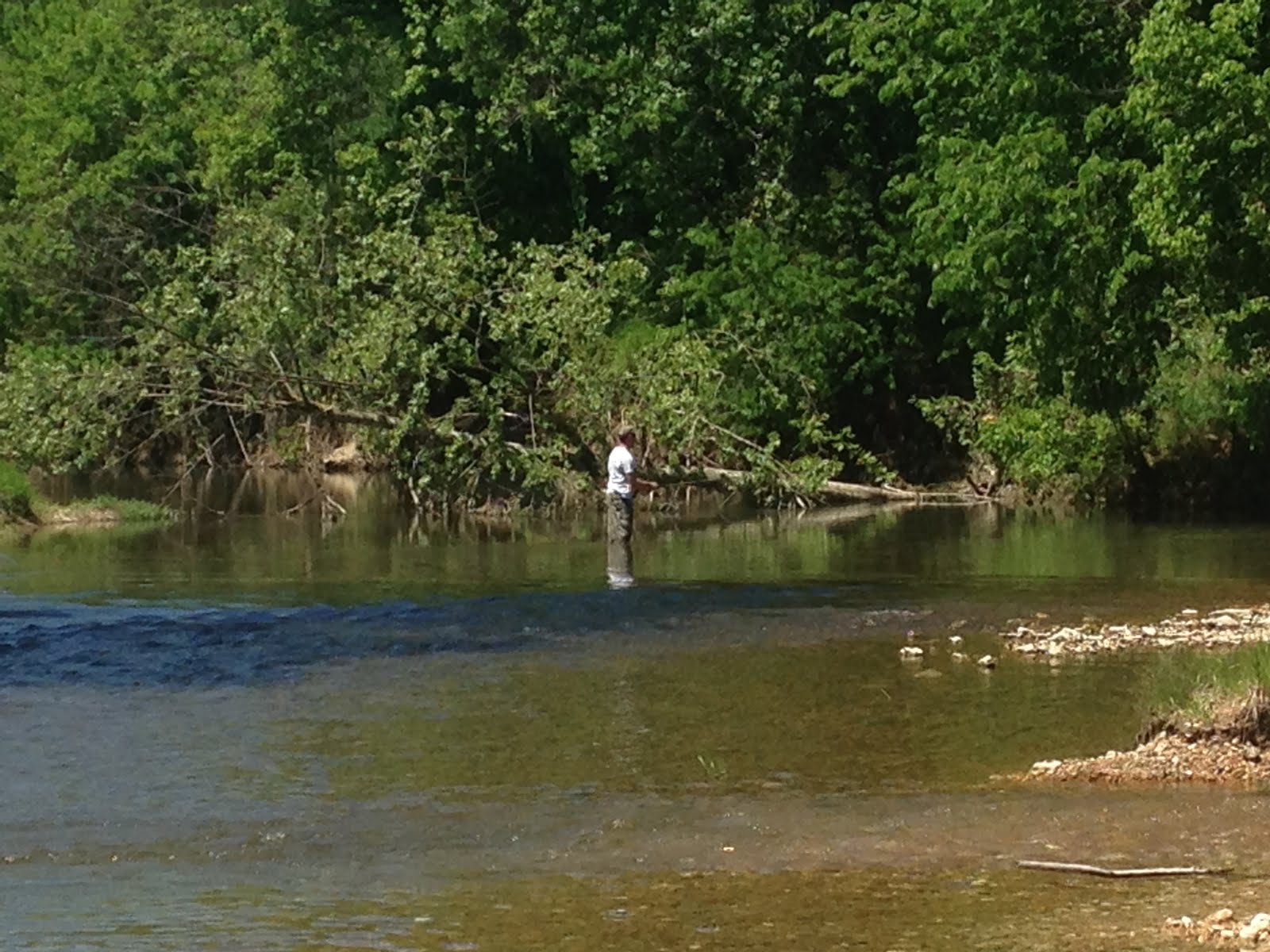

Thanks to some good friends of ours, we had the opportunity
to spend some time camping with them at their get-a-way spot. It was a fun filled weekend of great company,
great food, good weather, four wheeling, fire arms, fishing, swimming, and
relaxing. We had an amazing time, ate
like kings, and enjoyed every minute of it.
Just sitting around the fire visiting was a great time. Anytime you get an opportunity to spend some
quality time with your family and friends away from the everyday distractions
(TV, electronics, work, school, etc.) you should make the effort to do so. I believe it is necessary just to maintain a
healthy outlook and to keep things in perspective.
Subscribe to:
Posts (Atom)